How Cashback Websites Make Money Explained Simply
Posted on |
How Cashback Websites Make Money Explained Simply in 2026
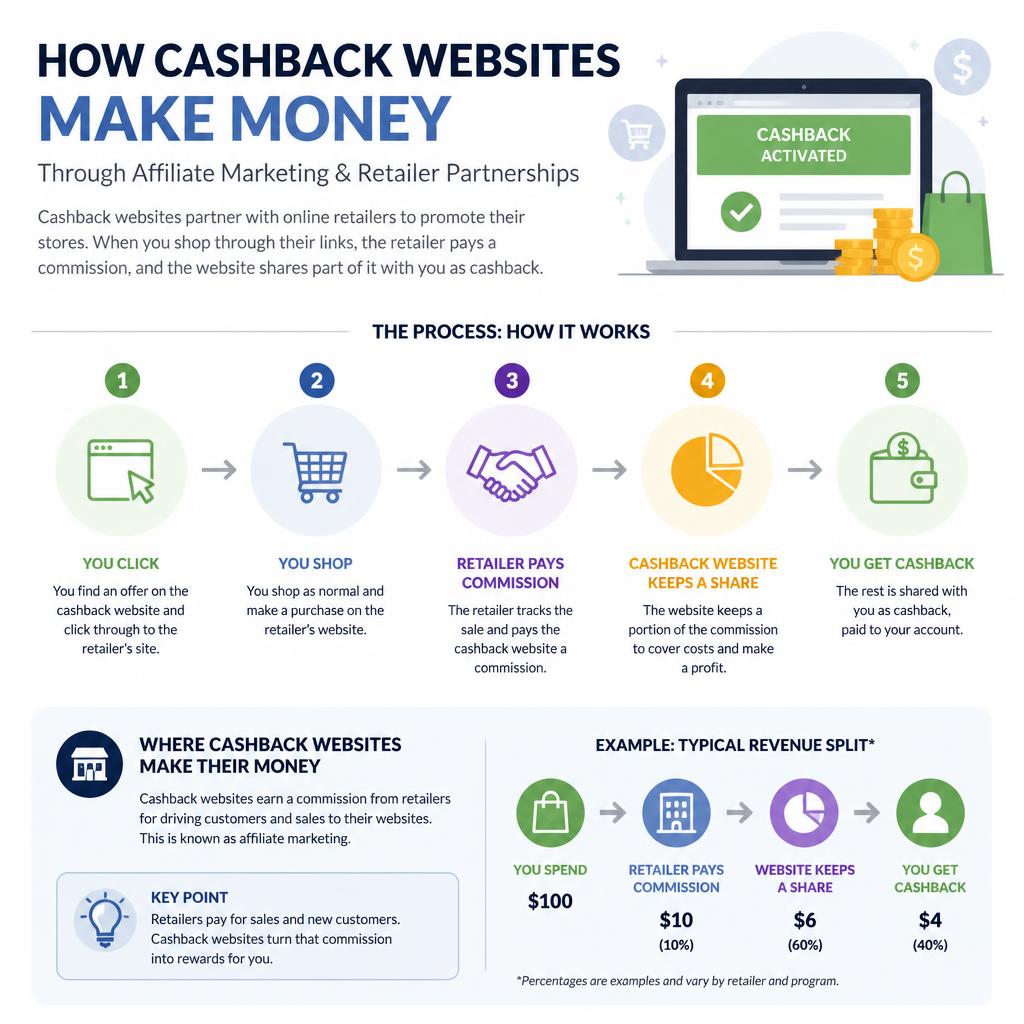
Cashback websites have become one of the most popular ways for online shoppers to save money. Millions of consumers now use cashback platforms when buying fashion, electronics, travel bookings, beauty products, software subscriptions, and household items online. These websites promise users something very attractive: shop normally and get part of your money back after completing purchases.
For many shoppers, cashback may seem confusing at first. A common question people ask is simple: if cashback websites are giving money back to users, how do these companies actually make money themselves?
The answer is surprisingly simple. Cashback websites earn money through affiliate marketing partnerships with online retailers. They receive commissions from stores when users make purchases, then share part of those commissions with shoppers as cashback rewards.
Although the idea sounds straightforward, the cashback business model involves several important systems working together behind the scenes. Understanding how cashback websites make money can help consumers use these platforms more effectively and maximize their savings safely.
What Is a Cashback Website?
A cashback website is a platform that rewards users for shopping through special tracked links.
Instead of going directly to an online store, shoppers first visit the cashback platform and click a retailer link from there. The cashback website tracks the purchase and later rewards the user with a percentage of the purchase amount.
For example:
- A shopper spends $200 online
- The retailer pays the cashback website a commission
- The cashback website shares part of that commission with the user
- The shopper receives cashback rewards later
This process happens automatically in most cases.
Cashback websites work with thousands of online stores across many industries including:
- fashion
- electronics
- travel
- beauty
- home products
- software
- food delivery
In 2026, cashback platforms continue growing because consumers increasingly want automatic savings without manually searching for promo codes.
The Core Business Model Behind Cashback Websites
The main way cashback websites make money is through affiliate commissions.
Affiliate marketing is a system where retailers pay partners for sending customers to their websites.
Cashback companies act as affiliate partners for online stores.
Here is how the process works:
- A retailer joins an affiliate program
- The cashback website promotes the retailer
- A shopper clicks through the cashback site
- The shopper completes a purchase
- The retailer pays a commission
- The cashback platform shares part of the commission with the user
The cashback company keeps the remaining portion as profit.
This system benefits all parties involved:
- shoppers save money
- retailers gain customers
- cashback websites earn commissions
Why Retailers Pay Cashback Websites
Some shoppers wonder why retailers are willing to pay cashback commissions at all.
The reason is customer acquisition.
Online stores compete aggressively for traffic and sales. Cashback websites help retailers attract shoppers who may not have visited otherwise.
Retailers see cashback rewards as a marketing expense similar to:
- digital advertising
- influencer marketing
- search engine ads
- social media promotions
Instead of paying only advertising platforms, retailers pay commissions only when actual purchases happen.
This makes affiliate marketing performance-based and highly attractive for businesses.
Cashback Websites Do Not Lose Money
One of the biggest misconceptions is that cashback websites lose money by rewarding users.
In reality, cashback companies simply share a portion of the affiliate commission they receive from retailers.
For example:
- A retailer pays a 10% affiliate commission
- The cashback website gives 6% to the user
- The cashback platform keeps 4% profit
This simplified example explains the basic model.
Because retailers already budget for marketing expenses, cashback commissions are simply another way to generate sales.
How Purchase Tracking Works
Tracking technology is essential for cashback systems.
When a user clicks a cashback link, tracking cookies or referral systems record the visit. If the shopper completes a purchase within a certain timeframe, the retailer can identify which cashback platform referred the customer.
This allows commissions to be assigned correctly.
Modern cashback systems use advanced tracking technologies including:
- browser cookies
- affiliate IDs
- app integrations
- server-side tracking
Without proper tracking, cashback rewards could not function accurately.
Why Cashback Payments Sometimes Take Time
Many users notice that cashback rewards are not paid instantly.
This delay exists because retailers must first confirm that purchases are valid.
Retailers need to check for:
- canceled orders
- product returns
- payment fraud
- refunded purchases
Once the retailer confirms the transaction, the cashback website receives the commission and releases the reward to the user.
Depending on the retailer, this process may take:
- a few days
- several weeks
- sometimes months
Travel bookings especially may have long cashback approval periods because reservations can be canceled later.
Additional Ways Cashback Websites Make Money
Affiliate commissions are the primary income source, but many cashback websites also generate revenue through other methods.
Sponsored Promotions
Retailers may pay extra fees for featured placement on cashback platforms.
For example:
- homepage promotions
- seasonal campaigns
- special holiday deals
- highlighted cashback boosts
These sponsored listings increase visibility for retailers.
Advertising Revenue
Some cashback websites display advertisements alongside offers.
Revenue may come from:
- banner ads
- display networks
- promoted stores
However, trusted cashback platforms usually balance ads carefully to maintain good user experience.
Premium Memberships
A few cashback platforms offer premium subscriptions with additional benefits such as:
- higher cashback rates
- faster payouts
- exclusive rewards
- bonus offers
Subscription revenue creates another income stream for these companies.
Browser Extensions Help Cashback Websites Grow
Browser extensions have become a major growth strategy for cashback companies.
Modern cashback extensions automatically:
- detect eligible stores
- activate cashback offers
- apply promo codes
- notify users about rewards
This convenience increases user engagement and purchase tracking success.
The easier cashback becomes, the more transactions platforms can generate.

Why Cashback Percentages Change
Cashback rates are not fixed permanently.
Retailers may increase or decrease commissions depending on:
- profit margins
- seasonal promotions
- product categories
- competition
- marketing budgets
For example:
- fashion brands may offer 15% cashback during holiday sales
- electronics retailers may offer lower percentages because margins are smaller
Cashback platforms adjust rewards accordingly.
Are Cashback Websites Legit?
Many people initially wonder whether cashback websites are legitimate.
The answer is yes — many major cashback platforms operate legally and successfully worldwide.
However, not all cashback sites are trustworthy.
Users should research platforms carefully before using them.
Trusted cashback websites typically provide:
- transparent payment policies
- verified reviews
- clear support systems
- secure browsing
- reliable payout history
Avoid suspicious websites promising unrealistic rewards or requiring sensitive information unnecessarily.
Common Cashback Mistakes Users Make
Many shoppers fail to maximize cashback rewards because of avoidable mistakes.
Using Promo Codes from Other Sources
Some external promo codes may invalidate cashback tracking.
Forgetting to Activate Cashback
Users must usually click through the cashback platform before shopping.
Ad Blockers Interfering with Tracking
Browser settings sometimes block affiliate tracking systems.
Returning Products
Returned purchases often cancel cashback rewards.
Understanding these issues helps users avoid losing rewards accidentally.
Why Cashback Is Growing Rapidly in 2026
Cashback continues growing because consumers increasingly prefer automatic savings over manually searching for discounts.
Several factors drive this trend:
- rising online shopping activity
- browser extension convenience
- mobile shopping apps
- inflation and price sensitivity
- growing competition between retailers
Consumers now actively look for ways to reduce costs on everyday purchases.
Cashback offers passive savings that accumulate over time.
The Future of Cashback Platforms
The cashback industry continues evolving rapidly.
Artificial intelligence now helps some platforms personalize rewards based on shopping behavior and preferences.
Future cashback systems may include:
- instant payouts
- AI-powered shopping recommendations
- automatic price comparisons
- cryptocurrency rewards
- deeper mobile wallet integration
Competition between cashback platforms is also increasing, leading to larger rewards and better user experiences.
Final Thoughts
Cashback websites make money through affiliate marketing partnerships with retailers.
Instead of losing money, they share part of their affiliate commissions with users while keeping the remaining percentage as profit.
This business model benefits everyone involved:
- shoppers earn rewards
- retailers gain customers
- cashback platforms generate revenue
As online shopping continues growing in 2026, cashback websites are becoming an increasingly important part of the digital shopping ecosystem.
Consumers who understand how cashback works can shop more strategically, combine rewards with promo codes, and maximize savings safely throughout the year.
Best Shopping Apps with Cash on Delivery